
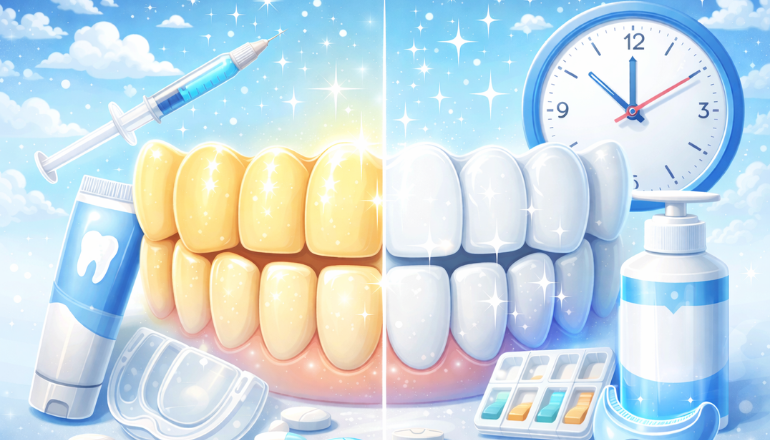
Teeth whitening isn’t permanent, lasting from a few months to 3 years, depending heavily on the treatment type such as professional treatment lasts longer than over-the-counter, your diet such as staining foods or drinks like coffee, red wine, oral hygiene, and habits like smoking.
Professional in-office treatments can last 1-3 years with good care, while at-home kits might last a few months, requiring touch-ups to maintain brightness.
What to Expect After Teeth Whitening?
Your teeth whitening treatment results depend on the type of stains you have and how your teeth respond to the whitening gel. Surface stains caused by food and drinks usually respond very well, while deeper stains may require multiple sessions.
To get the best outcome, it’s important to focus on enamel health, because strong enamel supports brighter, longer-lasting whitening. If your enamel is weak or sensitive, your dentist may suggest safer options to avoid irritation.
Consulting the best dentist in Dallas can help you choose the safest whitening method based on your teeth condition and sensitivity level. They can also recommend the right whitening strength, aftercare steps, and products to protect your enamel while keeping your smile bright for longer.
Professional Teeth Whitening vs At-Home Teeth Whitening
Increasing the lifespan of tooth bonding involves a combination of proper oral care habits and lifestyle choices.
Feature | Professional Teeth Whitening | At-Home Teeth Whitening |
Where It’s Done | Dental clinic | At home |
Whitening Strength | Stronger whitening gel | Lower-strength products |
Speed of Results | Fast (same day results) | Gradual (days to weeks) |
Whitening Treatment Duration | 30–90 minutes per session | 1–2 weeks (depending on kit) |
Teeth Whitening Results | More noticeable and even | Mild to moderate whitening |
Teeth Whitening Longevity | Longer-lasting | Shorter-lasting |
Safety & Supervision | Dentist-monitored (safer) | User-dependent (risk of misuse) |
Best For | Deep stains, quick results | Light stains, maintenance |
Sensitivity Management | Professional care available | May cause sensitivity if overused |
Cost | Higher | More budget-friendly |
What Impacts Teeth Whitening Longevity?
Teeth whitening longevity is strongly affected by your everyday habits. The biggest factor is exposure to stain-causing foods and drinks. Coffee, tea, red wine, berries, tomato-based sauces, and dark sodas can quickly dull your whitening results.
Another major factor is smoking and tooth discoloration, since tobacco stains teeth deeply and causes yellowing faster than most foods. To maintain white teeth, it helps to drink water after meals, use a straw for dark drinks, and limit staining items when possible.
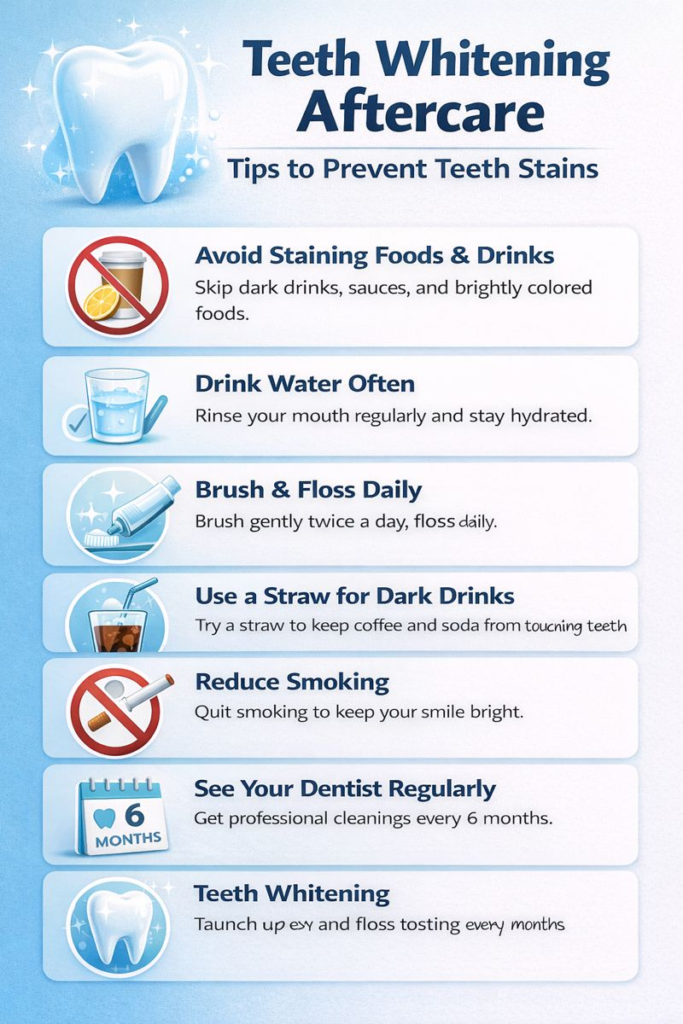
Teeth Whitening Aftercare Tips to Prevent Teeth Stains
Following proper teeth whitening aftercare is the best way to prevent teeth stains and keep your smile brighter longer. For the first 24–48 hours after whitening, avoid dark-colored foods and beverages because your teeth may absorb stains more easily.
This is also a great time to stick to lighter foods and focus on hydration. Small daily steps, like rinsing after coffee or brushing after meals, can go a long way in improving the life of your whitening results.
Teeth Whitening Maintenance: Your Oral Hygiene Routine
A strong oral hygiene routine is essential for effective teeth whitening maintenance. Good brushing and flossing habits remove plaque and reduce surface stains. Brushing at least twice a day, flossing daily, and using mouthwash can help keep teeth clean and healthier overall.
Many dentists also recommend a whitening toothpaste a few times per week, which can remove light stains and support a brighter look without overdoing whitening products.
Teeth Whitening for Sensitive Teeth and Managing Discomfort
Some patients experience sensitivity after whitening, especially those needing teeth whitening for sensitive teeth. The best approach is gentle sensitivity management, such as using toothpaste made for sensitivity and avoiding extremely hot or cold foods.
A dentist can also recommend a lower-strength product or a safer method if your teeth react easily. Managing sensitivity properly helps you stay consistent with whitening care without discomfort.
Touch-Up Treatments and Regular Dental Cleanings
Over time, whitening naturally fades. Therefore, teeth whitening touch-ups can help keep your results fresh. Some people do touch-ups every few months, while others do them once a year, depending on lifestyle.
Along with that, regular dental cleanings are one of the best ways to maintain a bright smile, because they remove buildup and polish stains before they settle deeply.
Want a brighter Smile for Long-Lasting Whitening Results? Contact us
If you want the best brighter smile tips, focus on consistent care. Avoid frequent staining foods, stop smoking if possible, brush and floss daily, and schedule dental visits regularly.
With the right dental whitening care and simple smile maintenance tips, you can enjoy long-lasting whitening results and keep your teeth looking clean, confident, and bright. Consult with your dentist by scheduling a consultation to determine how long teeth whitening may last.
FAQS
How long do teeth whitening results typically last?
Teeth whitening results typically last 6 months to 2–3 years, depending on the type of whitening treatment, your enamel health, and your daily habits like coffee drinking or smoking.
What factors cause teeth to lose their whiteness faster?
Teeth can lose whiteness faster due to stain-causing foods and drinks such as coffee, tea, red wine, smoking, poor oral hygiene, irregular dental cleanings, and frequent consumption of dark-colored sauces or sodas.
How can I maintain my teeth whitening results for longer?
You can maintain results by brushing and flossing daily, avoiding or limiting staining foods, drinking water after meals, using whitening toothpaste occasionally, and scheduling regular dental cleanings.
Are touch-up whitening treatments necessary?
Touch-up treatments are not always required, but they are helpful for keeping your smile bright. Many people choose touch-ups every 6–12 months depending on how quickly their teeth stain.
Is teeth whitening safe for sensitive teeth?
Yes, teeth whitening can be safe for sensitive teeth when done properly. A dentist may recommend lower-strength whitening options, sensitivity toothpaste, or special gels to reduce discomfort and protect your enamel.