

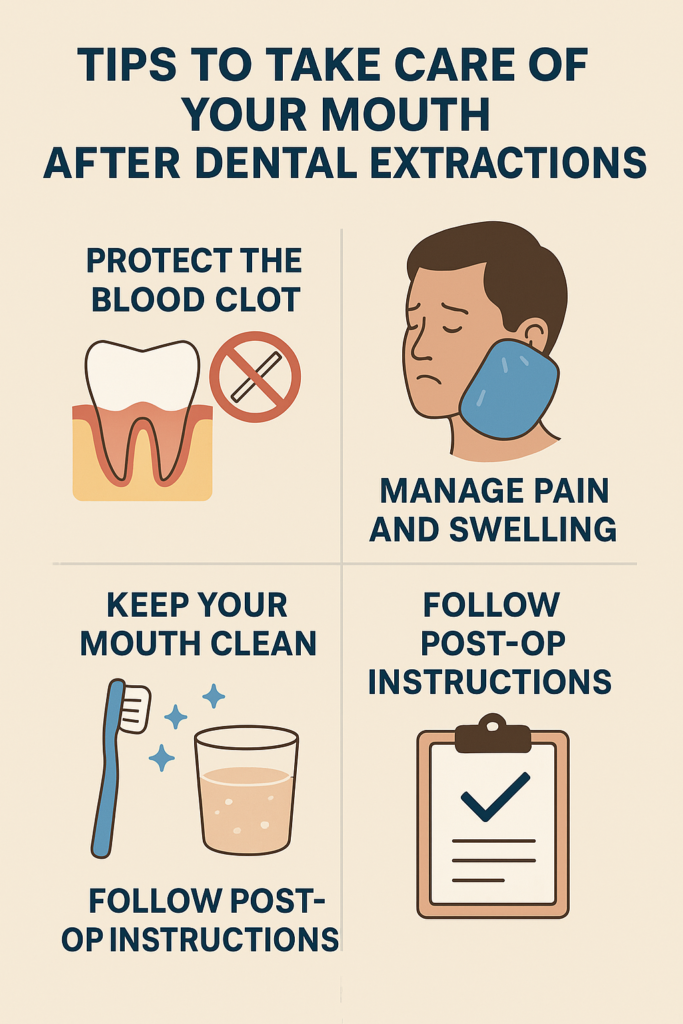
Tooth extractions are common, but the next 7 to 14 days matter most for post-extraction healing. The goal is simple to protect the clot, keep the area clean without disturbing it, and follow safe post-operative care steps so you heal on schedule.
What is tooth extraction?
Tooth extraction is a dental procedure in which a tooth is completely removed from its socket in the jawbone due to issues such as severe decay, infection, gum disease, trauma, overcrowding, or impacted wisdom teeth.
The procedure is performed by a dentist or oral surgeon under local anesthesia to minimize discomfort, and in some cases sedation may be used. The tooth extraction procedure helps prevent the spread of infection, relieves pain, and protects overall oral health when a tooth cannot be saved with restorative treatment.
Tips to take care of your mouth after tooth extractions
After a tooth extraction, an individual must concentrate on the use of ice for gentle care such as swelling, proper rest, and eating soft foods for days. You must avoid touching it again and again on the site.
Further, do not rinse, smoke, split, or even use straws for a day that will help protect the blood clot. It also helps to prevent dry sockets.
After 24 hours, gently rinse with warm salt water and carefully brush other areas, but keep the socket clean and follow your dentist’s specific instructions for pain meds and activity. A dentist in Dallas will provide you the necessary tips that will help you after the tooth extraction treatment.
First 24 hours: focus on Blood clot protection
Your body forms a clot to start gum healing. If it dislodges, the risk of complications like dry socket rises. Smoking is a major risk factor. Research shows smokers have markedly higher risk including “more than three-fold” higher odds in pooled analysis.
- Bleeding control: Bite gently on gauze as instructed. Expect light oozing; call your dentist if heavy bleeding continues.
- Rinse precautions: Avoid vigorous rinsing, spitting, or straws early on so you don’t disrupt the clot.
Swelling and comfort: use cold first, then warmth
For swelling control and swelling reduction after extraction of tooth in Dallas, TX, use Ice pack therapy or cold compress application on the outside of your cheek in short intervals during the first day. After the initial swelling period, many clinicians switch to gentle warmth if you’re tight or sore and follow your dentist’s post-extraction instructions.
Pain management: Follow Medication guidelines exactly. According to the Center For Disease Control and Prevention (CDC), NSAIDs are often more effective than opioids for surgical dental pain, and the ADA also emphasizes non-opioid options as first-line in many cases.
Cleaning your mouth safely: your Oral hygiene routine
Good oral hygiene tips prevent infection while protecting the site:
- Use a soft-brushing technique: brush other teeth normally, but stay gentle near the socket.
- Start a saltwater rinse when your dentist says it’s safe often after the first day or two. Mix a warm saltwater solution and swish gently, don’t “power rinse.”
- Watch for infection warning signs: worsening swelling after a few days, fever, foul taste or odor, pus, or increasing pain.
Food, activity, and habits: protect the healing site
Stick to a soft food diet and follow dietary restrictions after tooth extraction in Dallas and avoid crunchy, spicy, very hot foods early on. Hydrate well, especially in Dallas where dry winter air and indoor heating can leave you dehydrated.
- Respect activity limitations for at least 24 hours or longer if instructed.
- Absolute Smoking avoidance and smoking and alcohol avoidance are key for dry socket prevention, smoking is consistently linked to higher risk in the research.
Stitches and follow-up
If you have sutures, follow stitches care instructions; some dissolve on their own. Keep your follow-up appointment so your dentist can confirm your healing timeline and overall tooth removal aftercare progress.
Healing timeline: tenderness improves in days; soft tissue closes over 1–2 weeks. Deeper bone healing takes longer, your dentist will tailor expectations to your case.
Schedule Your Post-Extraction Care Consultation Today
Proper aftercare is essential for faster healing and preventing complications like infection or dry socket. If you’ve recently had a tooth extraction or are planning one, our dental team is here to guide you with personalized aftercare instructions and expert support, helping you heal comfortably, safely, and with confidence.
Schedule a consultation by calling at 469-249-9017 to know whether tooth extraction is appropriate for you.
Frequently Asked Questions on Root Canal Treatment
How do I care for my mouth after tooth extraction?
Follow your dentist’s post-extraction instructions, keep the area clean with gentle oral hygiene, and protect the blood clot by avoiding vigorous rinsing or spitting. Use prescribed medications, apply cold compresses, and eat soft foods to support healing.
How long does it take for your mouth to heal after extractions?
Initial gum healing usually occurs within 7–10 days, while complete healing of the extraction site and underlying bone can take several weeks. Healing time varies based on the tooth removed and individual health.
How to 100% avoid dry sockets?
You cannot guarantee 100% prevention, but you can greatly reduce risk by not smoking, avoiding straws, and keeping the blood clot undisturbed. Following all dentist instructions and maintaining gentle oral hygiene is essential.
What are the do’s and don’ts after tooth extraction?
Do: rest, apply ice packs, take medications as directed, and eat soft foods.
Don’t: smoke, drink alcohol, use straws, touch the extraction site, or engage in strenuous activity during early healing.